
Industrial Infrastructure
Aligning clean energy investments with Nigeria's industrial corridors to foster sustainable economic development.
Empowering Industrial Growth
SEAP's industrial infrastructure program aligns clean energy investments with Nigeria's emerging industrial corridors, ports, and logistics networks. By mapping electricity demand against trade hubs, rail lines, and special economic zones, we deliver hybrid power systems where they're most needed to drive job creation, manufacturing, and export growth.
Strategic Regional Projects Powered by SEAP
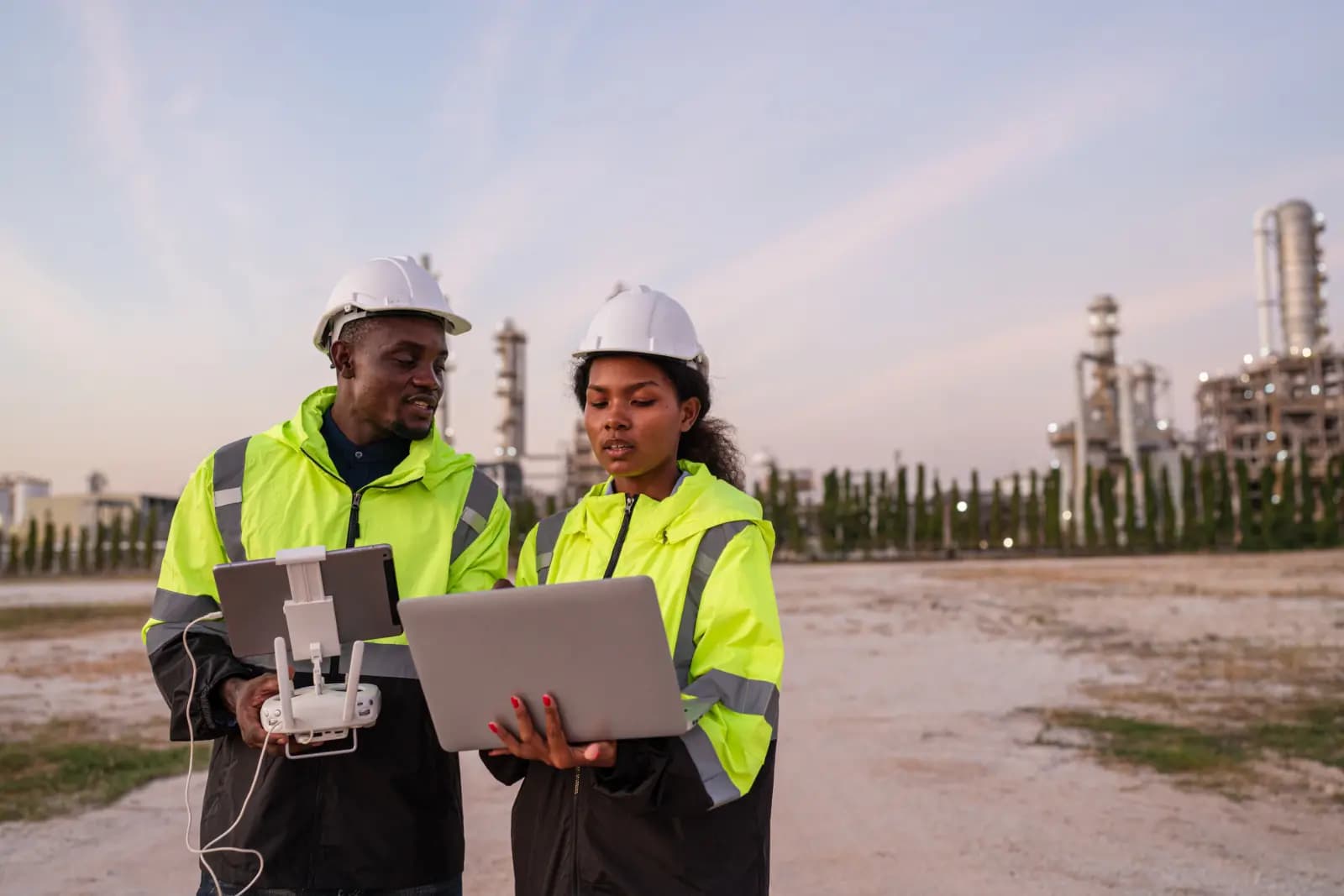
The Sustainable Energy Access Projects (SEAP) are strategically aligning clean energy deployment with Nigeria's expanding network of industrial corridors, ports, railways, and special economic zones. By leveraging satellite mapping, infrastructure datasets, and real-time demand intelligence, SEAP identifies areas where energy scarcity hinders productivity and deploys hybrid solar-gas mini-grids to meet industrial-scale power demands.
This approach connects clean power infrastructure to vital trade hubs such as the Lekki Free Zone, Kano SEZ, Ogun-Guangdong FTZ, and Calabar Free Trade Zone. These zones, along with critical ports like Apapa, Onne, and Warri, serve as anchors for economic growth but remain vulnerable to high electricity costs and frequent supply disruptions. SEAP's GIS mapping extends to major rail lines including Lagos-Ibadan, Kaduna - Abuja, and the Itakpe - Warri corridor and trade highways like Lagos - Kano - Jibia and Enugu-Port Harcourt, ensuring that energy solutions follow the arteries of commerce and industry.
The program specifically targets sectors with high electricity dependency. Textile and apparel hubs in Lagos, Kano, and Aba face production halts due to unreliable energy. Food processors in Ogun, Plateau, and Benue suffer from post-harvest losses linked to cold chain gaps. Steel, cement, and building material clusters in Kogi, Edo, and Ogun struggle with diesel-based operations that raise costs and emissions. Automotive and assembly lines across Anambra, Kaduna, and Lagos need stable voltage to scale operations, while packaging, plastics, and chemical industries near coastal states depend on uninterrupted energy for batch processing and safety.
By delivering clean, off-grid power with grid interface capability, SEAP reduces downtime, lowers production costs, and accelerates economic output. These energy investments are not only enabling industry they're positioning Nigeria as a greener, more globally competitive manufacturing base.
Across Nigeria's six geopolitical zones, SEAP is catalyzing region-specific economic growth by matching energy solutions with the industrial needs of each hub. These tailored interventions help unlock productivity, reduce carbon footprints, and promote resilient, decentralized power access where it's most impactful.
| Region | Project |
|---|---|
| North-Central | Lokoja Agro Belt (5-8 MW) |
| North-East | Bauchi Quarry & Cement (8-10 MW) |
| North-West | Kano Industrial Zone (10-12 MW) |
| South-West | Ogun FTZ Industrial Cluster (10-15 MW) |
| South-East | Aba SME Leather Cluster (3-5 MW) |
| South-South | Onne Port & Eleme Petrochem (25+ MW) |
Invest in Sustainable Growth
Join us in transforming Nigeria's industrial landscape through clean energy and innovative infrastructure solutions.